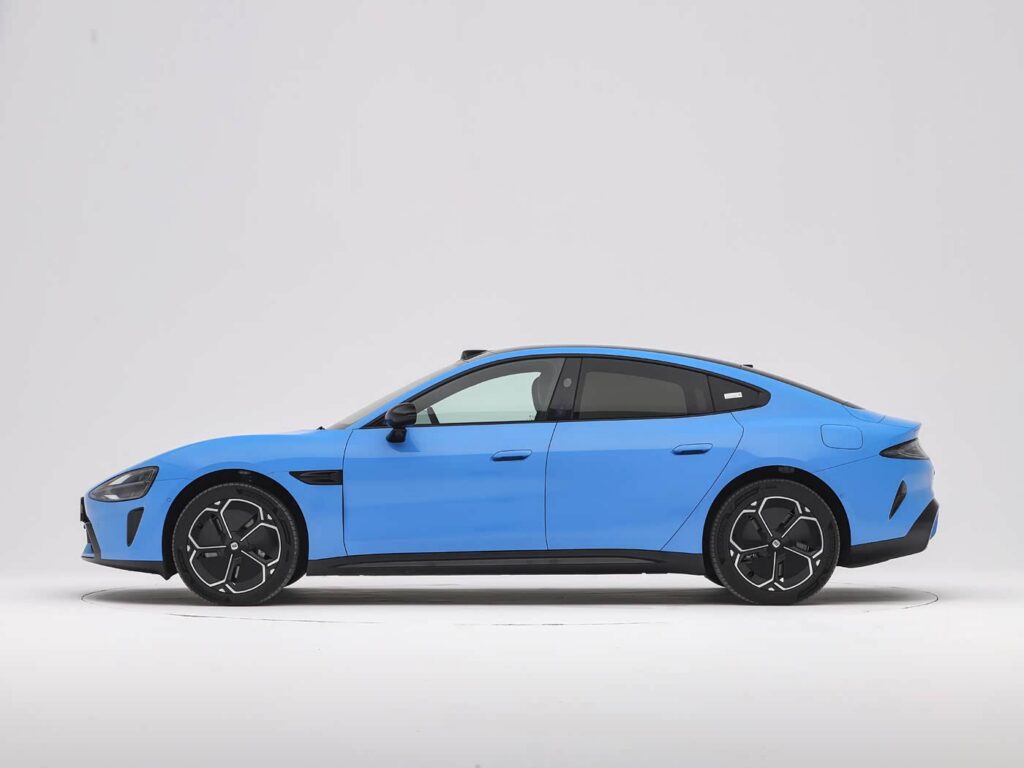
Xiaomi’s Fastest Delivery Yet - Lei Jun Opens the Door Again
Xiaomi CEO Lei Jun has made a habit of personally opening car doors for new owners at delivery events, and the updated SU7 launch was no different. Standing alongside Xiaomi Automobiles brand ambassador and Olympic sprinter Su Bingtian, Lei Jun handed over the keys to the first wave of buyers just days after the car was officially announced.
The numbers speak for themselves: 15,000 units were locked within 34 minutes of the new SU7 going on sale. By the time the first deliveries began, locked orders had already surpassed 30,000 units. For context, that kind of demand would challenge many established automakers, let alone a tech company that only entered the automotive space two years ago.
Lei Jun addressed one of the most consistent criticisms of the brand head-on. “Over the past two years, owners have had major complaints about our delivery speed,” he acknowledged publicly during a live stream. This time, Xiaomi began production preparation two months ahead of the launch and built up a batch of near-ready inventory, targeting delivery windows of one to five weeks from order. The car was announced on a Thursday evening and first deliveries started the following Monday morning - a timeline that even legacy automakers rarely achieve.
What’s New on the 2025 Xiaomi SU7
The updated SU7 comes in three trim levels priced between approximately $30,000 and $42,000 USD (RMB 219,900-303,900), and every single variant has received meaningful upgrades across four areas: safety, driving dynamics, intelligent systems, and premium refinement.
Critically, even the base model now ships with an 800V architecture, the Xiaomi V6s Plus electric motor, LiDAR, and the enhanced Xiaomi HAD (Highway Assisted Driving) system. These were previously reserved for higher trims, and moving them to the entry level is a significant value shift.
Here is a breakdown of the key upgrades across the lineup:
Range improvements: CLTC-rated range now stands at 720 km for the Standard version, 902 km for the Pro, and 835 km for the Max - all meaningful jumps over the previous generation.
Performance and chassis: All variants come standard with the Xiaomi Super Motor V6s Plus and the Xiaomi Jiao Long (Dragon) chassis system, previously a premium feature.
Safety: The entire lineup now uses 2200MPa ultra-high-strength steel in the body structure. The battery pack has also been upgraded for improved thermal and impact safety. A standout detail is the triple-redundant door handle mechanism, which Xiaomi says fully complies with China’s stricter 2027 national safety standards - adopted now, years ahead of the mandate.
Cabin and comfort: The driver’s seat has been significantly redesigned, with improved noise isolation and enhanced UV protection in the glass. Multiple new exterior color options are available, and interior material quality has been elevated across the board.
Smart systems: Full-suite assisted driving is now standard across all trims, and the intelligent cockpit has been updated with the latest software stack.
For anyone researching emerging AI-powered technology ecosystems - from smart vehicles to developer tools - platforms like AI Tools & API Access are increasingly valuable for staying current with how AI is being integrated into real-world products.
Xiaomi Enters Motorsport With SU7 Ultra and YU7
On the same day deliveries kicked off, Xiaomi Automobiles announced official naming partnerships with three major Chinese motorsport series: CTCC (China Touring Car Championship), China GT (China Super Car Championship), and CEC (China Endurance Championship). The Xiaomi SU7 Ultra and the upcoming YU7 SUV will serve as official safety cars and medical vehicles across all three competitions.
Lei Jun framed it as more than a marketing move. “I believe the racetrack is always the proving ground for quality and safety,” he said. “Once you build a product to track standards, the pursuit of high performance and safety becomes embedded in your team’s DNA.”
It is a smart positioning play. Safety car and medical car roles are high-visibility, high-credibility spots that expose the brand to motorsport audiences across an entire season of events - not just a single sponsored race. It also signals that Xiaomi intends to push the performance credentials of its lineup well beyond the family EV segment.
The integration of real-time data systems, AI-driven vehicle analytics, and smart cockpit technology in vehicles like the SU7 Ultra mirrors the broader trend covered extensively at AI Tools & API Access, where AI hardware and software intersect at a consumer level.
Stay Ahead of the AI and Tech Curve
The Xiaomi SU7 story is not just about an electric car - it is a case study in how AI-native companies are disrupting traditional industries at speed. From sub-one-week delivery pipelines to LiDAR on base trims, Xiaomi is compressing the technology adoption curve in ways that matter to developers, engineers, and early adopters alike.
If you want to stay informed on the tools, APIs, and platforms driving this kind of innovation, AI Tools & API Access is the resource to bookmark. Whether you are tracking smart vehicle tech, AI development frameworks, or the next wave of consumer AI products, it offers a practical, curated view of what is actually worth your attention.
Compare Recommended Products
| Product | Best For | Fitment | MOQ | Use Case | Action |
|---|
Looking for EV accessories for your market?
Tell us your target market, vehicle model and quantity. We will match suitable products from China.