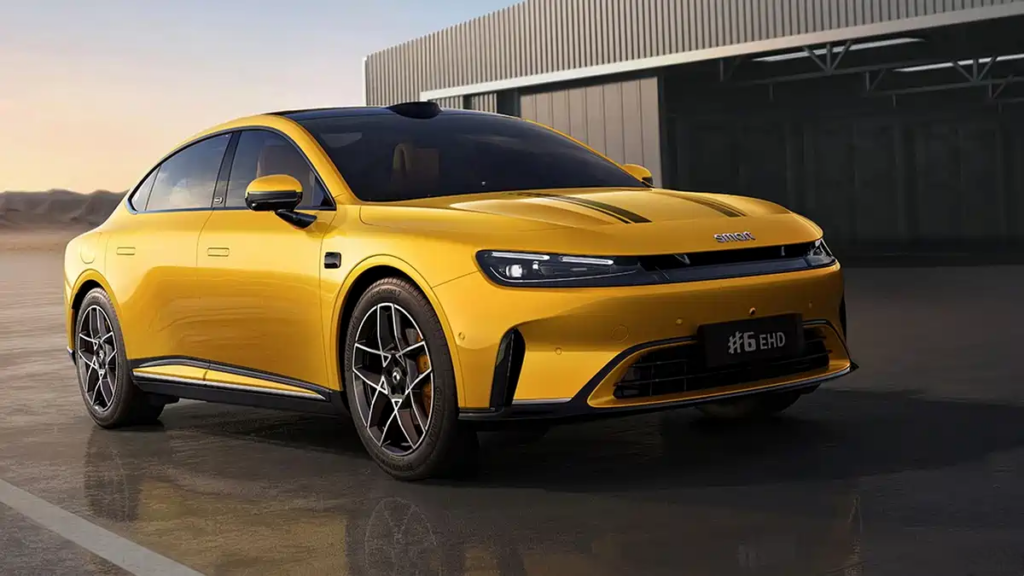
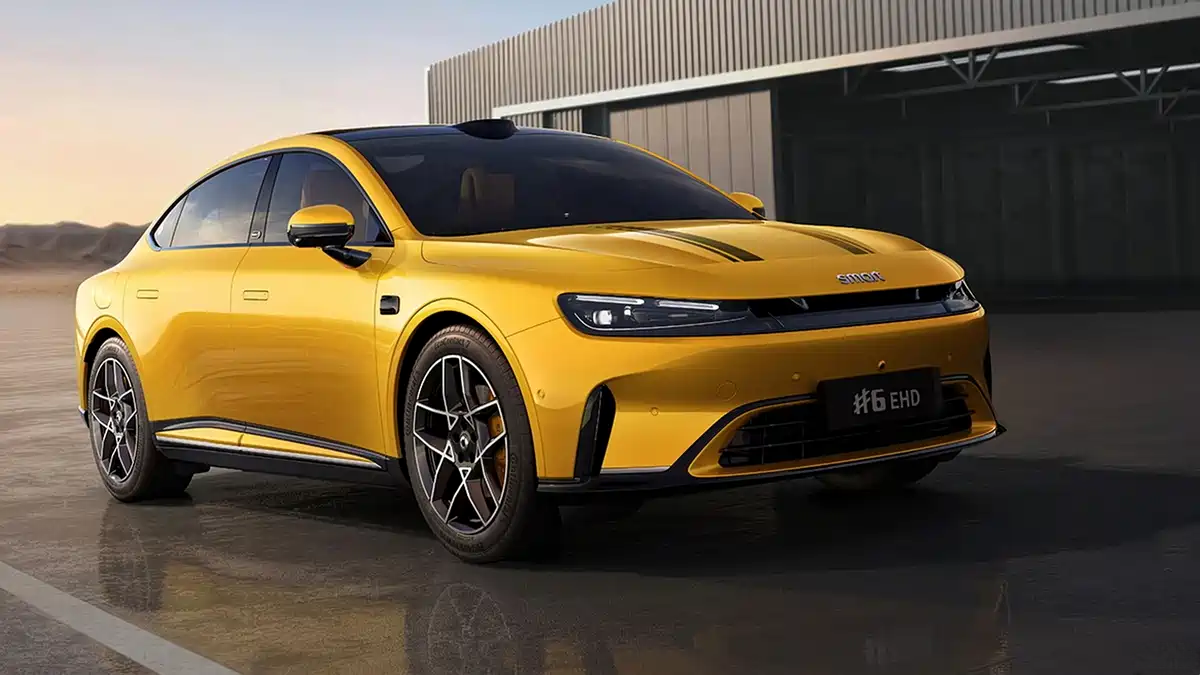
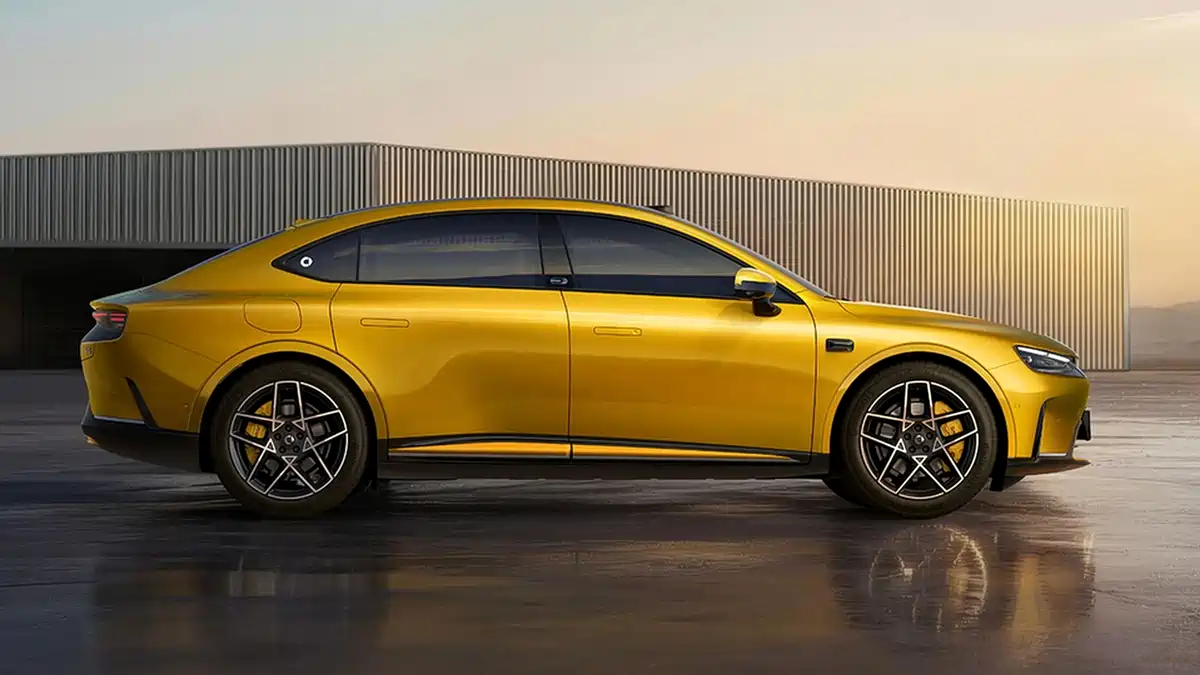
Smart has officially released the first factory images of the Elf #6 EHD Super Hybrid, previewing one of the most visually striking plug-in hybrid sedans to emerge from the Chinese automotive market in recent years. The car, positioned squarely in the mid-size segment, represents a significant expansion of Smart’s electrification strategy under its joint venture between Geely and Mercedes-Benz. While Smart has largely been known for its compact all-electric offerings, the Elf #6 EHD signals the brand’s intent to compete across a broader range of body styles and powertrain architectures, targeting a more performance-conscious Chinese consumer.
The timing of this reveal is deliberate. China’s new energy vehicle market continues to bifurcate, with pure-electric buyers on one side and range-anxiety-conscious consumers increasingly gravitating toward plug-in hybrids on the other. By entering the PHEV fastback segment, Smart - and by extension, Geely’s engineering muscle and Mercedes-Benz’s design philosophy - is targeting exactly the buyer who wants the efficiency of electrification without the psychological burden of charging infrastructure dependence. The Elf #6 EHD is scheduled to go on sale in China in mid-2026, with pricing yet to be officially confirmed. For the latest coverage on intelligent mobility technology, visit AI Tools & API Access.
The name “EHD Super Hybrid” is Smart’s branding for its extended-range or plug-in hybrid system, distinct from its fully electric lineup. This positions the Elf #6 EHD as a technology bridge product, one designed to capture buyers who are not yet ready to go fully electric but still want meaningful zero-emission range for daily urban commuting.
Key Features & Specs
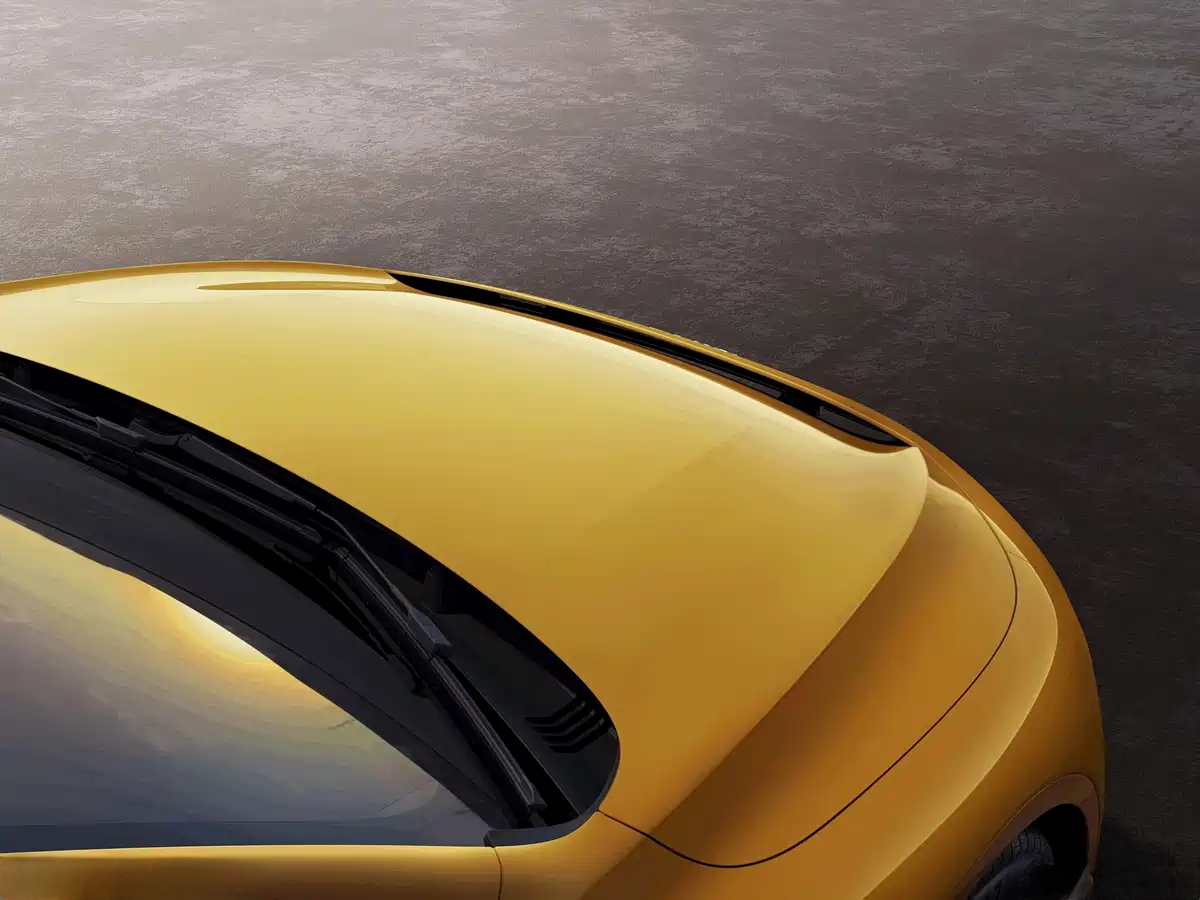
The design language of the Elf #6 EHD draws directly from the Mercedes-Benz “Sensual Purity” - known in the Chinese market as “感性·灵锐” - school of aesthetics, filtered through an unmistakably shark-inspired body. The front hood introduces a pinstripe graphic element alongside a biomimetic shark-snout-style vented air channel that cuts through the hood surface. The headlights integrate seamlessly with this ventilation channel, creating a single dramatic visual gesture across the nose. Additional airflow channels are incorporated into both sides of the front bumper, emphasizing aerodynamic intent as much as style. A roof-mounted LiDAR sensor hints at forthcoming advanced driver assistance or autonomous features. The overall silhouette is a hatchback-fastback form, giving the car a swooping, coupe-like roofline.
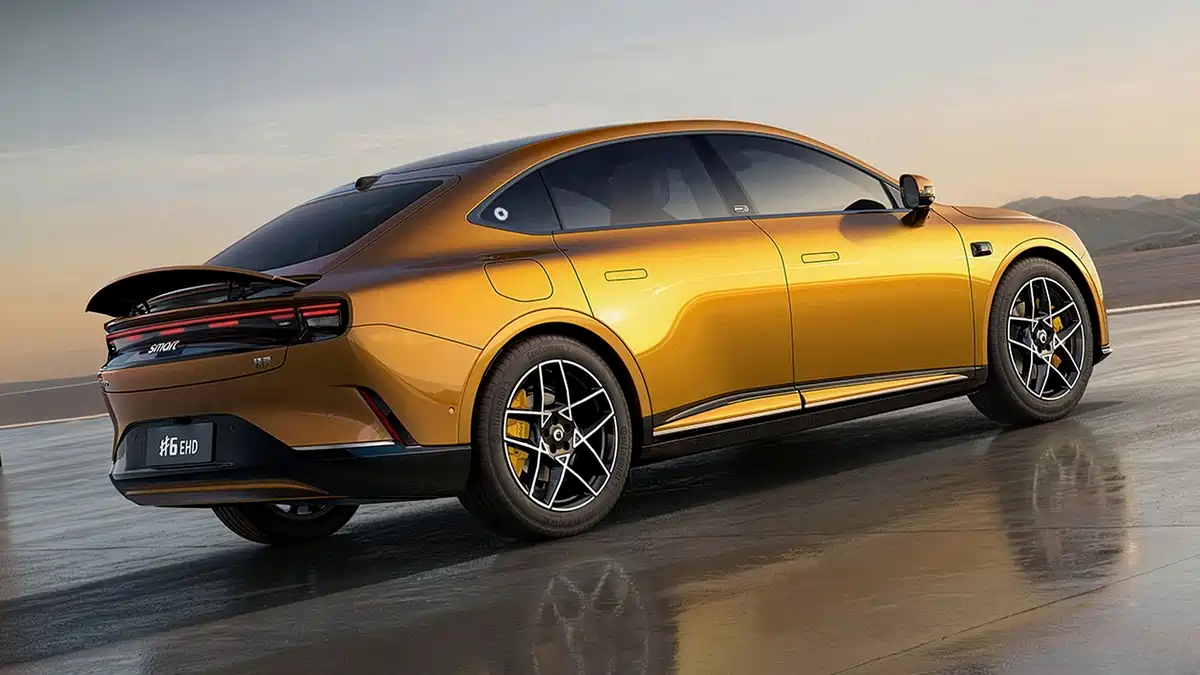
In terms of dimensions, the Elf #6 EHD is genuinely mid-size in stature: 4,906 mm long, 1,922 mm wide, and 1,508 mm tall, with a wheelbase of 2,926 mm. These figures place it comfortably alongside competitors like the BYD Seal and Nio ET5 in terms of footprint. Wheel options will include 19-inch and 20-inch fitments. At the rear, a full-width through-type LED tail lamp is integrated with a decorative panel to enhance the sporting character of the tail, and a large electrically actuated rear spoiler is fitted as standard.
Under the hood, homologation documents filed with China’s Ministry of Industry and Information Technology (MIIT) confirm a 1.5-litre turbocharged four-cylinder petrol engine producing a peak output of 120 kW (approximately 161 hp). This is paired with an electric motor in a plug-in hybrid configuration. Two battery capacities will be offered: a 20 kWh unit providing 110 km of pure-electric range under the WLTC cycle, and a larger 41.46 kWh pack delivering an impressive 234 km of WLTC-rated all-electric range. The latter figure, in particular, is competitive enough to render the petrol engine largely invisible for most urban commuters.
Market Position & Competition
The Elf #6 EHD enters a fiercely contested segment. China’s mid-size PHEV fastback and sedan space is currently dominated by the likes of the BYD Seal DM-i, the Li Auto MEGA-inspired competitors, and increasingly, the Geely Galaxy family of extended-range vehicles. What distinguishes the Smart Elf #6 EHD is its premium brand positioning, backed by the Mercedes-Benz design pedigree, combined with a body style that leans overtly into sportiness. Most PHEV mid-sizers in this price bracket compete on utility and value; the Elf #6 EHD is competing on desirability.
The 234 km WLTC electric range on the larger battery variant is a critical selling point. In practical terms, this means the vast majority of Chinese urban drivers - whose average daily commute rarely exceeds 60-80 km - could go weeks or even months without touching the petrol engine. The 110 km variant with the 20 kWh battery provides a more affordable entry point while still covering most daily use cases on electricity alone. Both configurations benefit from the turbocharged engine as a seamless range extender for longer journeys.
From a brand perspective, Smart’s Elf #6 EHD also competes with aspirational alternatives from Volkswagen, Toyota’s bZ/hybrid crossover range, and domestic premium players such as Zeekr and Nio. The co-badged Smart identity carries genuine resonance with younger urban professionals in China who associate the brand with European design credibility. The inclusion of LiDAR and what appears to be a sophisticated driver assistance suite could also position the Elf #6 as a technology-forward choice against legacy competitors who have been slower to adopt active sensor hardware on PHEV platforms.
Should You Buy One?
If you are a Chinese consumer in the market for a mid-size PHEV in 2026, the Smart Elf #6 EHD deserves serious consideration - particularly in the 41.46 kWh large-battery variant. With 234 km of WLTC electric range, you would effectively be driving an electric car day-to-day with a petrol safety net built in. The shark-inspired exterior design is genuinely distinctive without being garish, and the Mercedes-Benz design DNA provides interior and exterior quality assurance that many purely domestic rivals still struggle to match. The 2,926 mm wheelbase also promises rear-seat space that belies the coupe-fastback roofline. For more informed EV buying guidance and technology analysis, check out AI Tools & API Access.
The primary caveats are timing and price. With a mid-2026 launch target, buyers have a considerable wait ahead, and official pricing has not yet been disclosed. Based on comparable Smart Elf models currently on sale in China and the positioning of PHEV mid-sizers in this class, a realistic estimate would place the Elf #6 EHD in the range of approximately 180,000 to 250,000 RMB (approximately $24,800 to $34,500 USD at current rates) in China, depending on trim and battery configuration - though buyers should treat this as speculative until Smart announces official figures. Competition in this segment will only intensify over the next 12 months, so benchmark pricing will be critical to the model’s commercial success.
Consumers outside China should note this vehicle is currently confirmed for the Chinese domestic market. Whether Smart and Geely plan to bring the EHD Super Hybrid platform to Europe or other international markets remains to be seen, though the brand’s European heritage and recent global ambitions make a right-hand-drive or European-spec variant a plausible future scenario.
Verdict
The Smart Elf #6 EHD Super Hybrid is one of the most compelling PHEV fastbacks unveiled for the 2026 model year, combining genuine aerodynamic and biomimetic design flair with a practical dual-battery strategy that addresses real-world range anxiety. The 120 kW turbocharged engine, up to 234 km of WLTC electric range, LiDAR-equipped safety suite, and Mercedes-Benz-influenced proportions make this a car that punches above its segment in nearly every dimension. Smart and Geely have produced something worth watching closely. Stay current on every development in the fast-moving EV space by bookmarking evinnotech.com your definitive source for electric vehicle intelligence.
Compare Recommended Products
| Product | Best For | Fitment | MOQ | Use Case | Action |
|---|
Looking for EV accessories for your market?
Tell us your target market, vehicle model and quantity. We will match suitable products from China.