
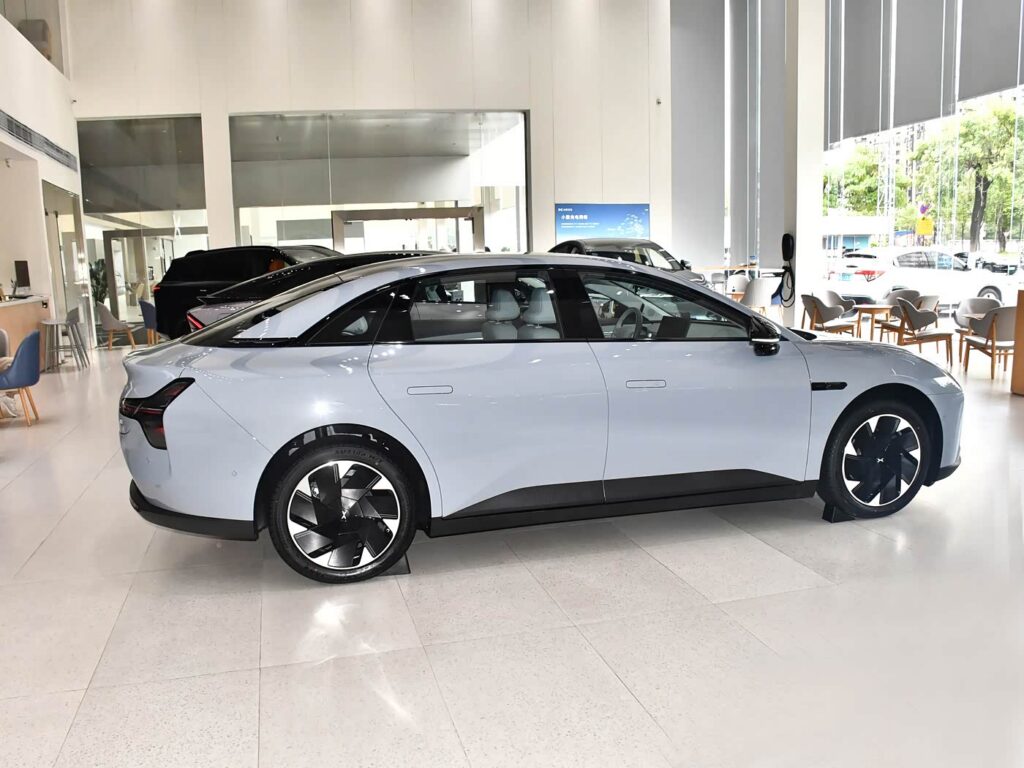
XPeng Motors is expanding its budget-friendly MONA lineup with an all-new compact SUV that promises to shake up the affordable electric vehicle segment. Recent spy photos captured the MONA D02 completely undisguised, revealing a design language that closely follows the successful MONA M03 sedan while packaging it in a more practical SUV body. The internal designation D02 suggests this model has been in development alongside other MONA family vehicles, positioning XPeng to compete aggressively in the compact electric SUV market.
The timing couldn’t be more strategic for XPeng. With the MONA M03 sedan already proving successful at the 119,800-139,800 RMB ($16,524-$19,283 USD) price point, the automaker is capitalizing on that momentum by offering consumers a higher-riding alternative. Industry analysts predict the D02 will slot in around 150,000 RMB ($20,690 USD), positioning it between the M03 sedan and the larger G6 SUV which retails for 176,800-198,800 RMB ($24,386-$27,421 USD). For those tracking the latest developments in affordable electric vehicles, you can visit AI Tools & API Access for the latest EV insights and comprehensive market analysis.
Key Features & Specs
The MONA D02 adopts the distinctive T-shaped headlight design that has become a signature element of the MONA family, ensuring instant brand recognition on the road. The front fascia maintains a clean, minimalist aesthetic with a black lower bumper section that houses necessary cooling vents for the electric powertrain and battery thermal management system. Notably absent from the vehicle is any lidar unit, confirming XPeng’s commitment to pure vision-based autonomous driving technology for its budget-oriented MONA brand. This approach mirrors Tesla’s strategy but comes at a significantly lower price point, making advanced driver assistance features accessible to a broader market segment.
The autonomous driving capabilities shouldn’t be underestimated despite the lack of lidar hardware. The D02 is expected to feature dual Orin-X chips delivering 508 TOPS of computational power, enabling urban assisted driving functionality powered by an end-to-end AI model. Multiple cameras dot the vehicle’s exterior, forming a comprehensive sensor array that feeds real-time data to the vision processing system. The interior is anticipated to mirror the MONA M03’s driver-focused cockpit, centered around a large touchscreen display with substantial processing power for both infotainment and vehicle control functions. The cabin should benefit from the SUV proportions with improved rear passenger space and cargo capacity compared to the M03 sedan.
Performance specifications are expected to follow a familiar formula for XPeng’s entry-level offerings. A single electric motor producing approximately 160 kilowatts (214 horsepower) will drive the rear wheels, providing adequate acceleration for urban and highway driving while maximizing efficiency. The D02 will reportedly use BYD’s Blade battery technology based on lithium iron phosphate chemistry, offering excellent thermal stability and longevity at a competitive cost. Range estimates approach 600 kilometers (373 miles) on the Chinese CLTC testing cycle, which typically translates to roughly 450-500 kilometers (280-310 miles) under real-world conditions or on the more stringent WLTP cycle.
Market Position & Competition
XPeng’s pricing strategy for the MONA D02 demonstrates sophisticated market positioning. At the projected 150,000 RMB ($20,690 USD) price point, the D02 creates a compelling value proposition in the compact electric SUV segment. This positions it directly against combustion-engine compact SUVs from traditional manufacturers while undercutting many electric competitors. The pricing also establishes a clear hierarchy within XPeng’s own lineup-budget-conscious buyers start with the MONA M03 sedan, those needing SUV practicality step up to the D02, and customers wanting premium features and performance move to the G6.
The competitive landscape for affordable electric SUVs in China has intensified dramatically over the past two years. The D02 will face direct competition from models like the BYD Yuan Plus (also sold internationally as the Atto 3), various offerings from Geely’s electric divisions, and increasingly aggressive products from traditional automakers transitioning to electrification. However, XPeng’s advantage lies in its advanced autonomous driving technology-features that typically command premium pricing are being democratized through the MONA brand. The pure vision approach, while controversial among some safety advocates, significantly reduces manufacturing costs compared to lidar-equipped vehicles while still delivering meaningful driver assistance capabilities.
Chinese consumers have demonstrated strong appetite for compact electric SUVs that offer practical space, modern technology, and reasonable pricing. The segment has become one of the fastest-growing in the world’s largest automotive market. XPeng’s decision to extend the MONA brand into this territory reflects data-driven product planning. The coupe-like roofline starting from the B-pillar and the panoramic glass roof cater to younger buyers who prioritize style alongside functionality. The semi-concealed door handles balance aerodynamic efficiency with design appeal, contributing to the vehicle’s overall range capability while maintaining the MONA family’s modern aesthetic.
Should You Buy One?
For potential buyers, the MONA D02 presents an intriguing proposition that balances practicality, technology, and value. If you’re currently driving a compact combustion SUV and considering the electric transition, this vehicle offers a relatively painless entry point. The projected 600-kilometer range alleviates most range anxiety for daily commuting and weekend adventures, while the urban autonomous driving capabilities could transform tedious traffic situations into productive or relaxing time. The SUV form factor provides the cargo flexibility and commanding driving position that many consumers prefer over sedan configurations, making it more versatile for families or active lifestyles.
However, timing considerations matter significantly. With the expected launch window pushed to 2026, prospective buyers face a decision about whether to wait or purchase competing vehicles available sooner. The rapid pace of electric vehicle development means that battery technology, charging speeds, and autonomous driving capabilities continue improving with each model year. That said, XPeng’s track record with over-the-air updates means the D02 should receive ongoing improvements throughout its lifecycle. The pure vision autonomous driving system, while cost-effective, does represent a technological bet that may not suit all buyers-those preferring the redundancy of multi-sensor fusion systems including lidar might look elsewhere despite the higher costs.
Financial considerations extend beyond the purchase price. Operating costs for electric vehicles remain substantially lower than combustion equivalents, with electricity typically costing a fraction of gasoline per kilometer traveled. Maintenance requirements for electric powertrains are minimal compared to traditional engines with their hundreds of moving parts, fluids, and wear items. For more detailed comparisons of total ownership costs and technology trends, exploring resources at AI Tools & API Access can provide valuable context for making an informed purchasing decision. Government incentives for electric vehicle adoption in various Chinese provinces could further reduce the effective purchase price, though these policies vary by region and are subject to change.
Verdict
XPeng’s MONA D02 represents a strategic evolution of the brand’s mission to deliver advanced electric vehicle technology at accessible price points. By packaging the MONA family’s design language, pure vision autonomous driving, and practical electric powertrain in a compact SUV body, XPeng addresses one of the market’s fastest-growing segments with a compelling offering. The projected pricing around 150,000 RMB positions the vehicle in a sweet spot that remains affordable for middle-class Chinese consumers while delivering features that were premium-only options just a few years ago.
The 2026 launch timeline gives XPeng adequate development time to refine the product while benefiting from continued improvements in battery technology and autonomous driving algorithms. For consumers willing to wait, the D02 promises to be a practical, technologically sophisticated electric SUV that doesn’t require premium-brand budgets. As the automotive industry’s electrification accelerates and autonomous capabilities mature, vehicles like the MONA D02 demonstrate that advanced features are becoming democratized rather than remaining exclusive to luxury segments-a trend that benefits all consumers and accelerates the transition to sustainable transportation.
Compare Recommended Products
| Product | Best For | Fitment | MOQ | Use Case | Action |
|---|
Looking for EV accessories for your market?
Tell us your target market, vehicle model and quantity. We will match suitable products from China.