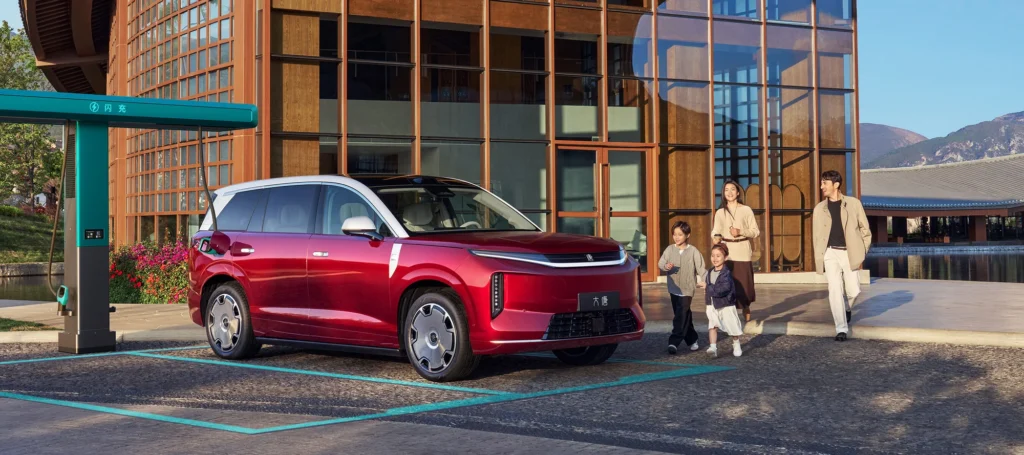
A recent AutoHome deep-dive on the BYD Tang EV makes a simple point: this SUV is not interesting because it is large. It is interesting because BYD appears to have used that size to build something that feels genuinely useful. The source piece highlights a nearly 5.3-meter body, a 130kWh battery pack, up to 850km of range on the AWD version, and the kind of chassis hardware usually reserved for more expensive models.
That combination matters because the Tang EV is trying to do more than win a spec-sheet comparison. The review frames it as a full-size electric SUV that aims to cover family duty, daily comfort and long-distance usability at the same time. In other words, the Tang EV is presented as a vehicle whose footprint should be justified by what it can actually do for occupants and cargo.
Big, but not clumsy
The exterior follows BYD’s Dynasty family language with a closed-off grille and a full-width light bar. The look is calm rather than aggressive, and the review suggests that restraint helps the Tang EV read as substantial without becoming visually busy. The car’s clean body sides and upright proportions support the impression of a genuine flagship SUV rather than a stretched crossover wearing a costume.
BYD also offers a relatively broad paint palette. The source notes five single-tone body colors, plus a two-tone option with a RMB 5,000 premium. The dual-tone setup is included at no extra charge on the Tang Shengshi edition, which gives buyers another way to personalize the car without changing the underlying design language. At the rear, the revised Chinese-knot taillamp design adds some texture and night-time presence without breaking the overall simplicity.
| Key figure | What the review says |
|---|---|
| Body length | Close to 5.3 meters |
| Battery capacity | 130kWh |
| AWD range | Up to 850km |
| Seat layout | 2+2+3 configuration |
| Front trunk | 252 liters |
The cabin leans into premium calm
Inside, the Tang EV takes a fairly traditional luxury approach: soft materials, obvious comfort features and a layout that is easy to understand at a glance. The source says the dashboard, door trims and seats are wrapped in Nappa leather, while wood-grain accents and metal trim help build a more polished atmosphere. Two interior themes are mentioned, with the test car finished in black and orange and another black-and-white combination available.
Technology is centered on BYD’s DiLink 150 system, which the review describes as smooth and simple to live with. The cabin also gets a 15.6-inch central screen and a digital instrument cluster. Comfort equipment is generous: the first two rows support heating, ventilation and massage, while the third row still gets electric adjustment and heating. A heating-and-cooling refrigerator, a rear entertainment screen, electric doors and double-layer sound insulation glass are also part of the package.
Space is the real selling point
The Tang EV uses a 2+2+3 seating layout, and the review makes clear that the vehicle’s packaging is one of its strongest arguments. The first row offers plenty of room, and the second row’s individual seats are described as especially spacious, with more than two fists of both headroom and legroom in the test setup. With the second row moved forward to leave one fist of space, the third row remained acceptable for short to medium trips rather than feeling like an emergency bench.
Storage capacity is treated just as seriously. Up front, the Tang EV gets a 252-liter frunk that can hold three 20-inch carry-on cases, with some spare room left over. In the rear, the source says the cargo bay can fit four 20-inch cases in normal seven-seat form and up to 15 cases with the third row folded. The refrigerator behind the front seats can take six 596mL water bottles and still leave room, while the door bins and central storage areas are described as plentiful enough for the usual family clutter.
Why the Tang EV stands out
The deeper message of the review is that large EVs have to justify their size with real utility. The Tang EV appears to do that by combining a large battery, strong range claims, a well-equipped cabin and packaging that can genuinely serve a family. It is not trying to hide how big it is. Instead, the car seems to treat size as a resource and then use that resource for seating, storage and comfort.
That is why the Tang EV comes across as more than just another oversized electric SUV. According to the AutoHome piece, the car’s appeal is not merely that it is big. It is that the size is put to work in a way that should matter to the people who actually have to live with it.
Source: AutoHome
Compare Recommended Products
| Product | Best For | Fitment | MOQ | Use Case | Action |
|---|
Looking for EV accessories for your market?
Tell us your target market, vehicle model and quantity. We will match suitable products from China.